

Travel Tips For Students 2026 Budget And Safety Guide
Stretch your budget, plan smart, stay safe, and travel more for less.
You are here for clear, proven travel tips for students. I have planned trips for study abroad groups and coached many first-time travelers. In this guide, I share what works in real life. You will learn how to plan, save, and move with confidence. If you want reliable travel tips for students, keep reading.
Smart planning for student travel
These travel tips for students start with a simple rule: plan early, but keep space to adapt. Early planning locks better prices. Flexibility unlocks better days on the road.
Define your goal and your budget
- Pick a theme for your trip. Culture, food, hiking, language, or research.
- Set a total budget. Then split it by transport, stay, food, and fun.
- Add a 10 percent buffer. It saves you when plans change.
Travel when prices drop
- Aim for shoulder seasons. Late spring and early fall are often cheaper.
- Fly midweek if you can. Many routes cost less on Tuesdays or Wednesdays.
- Book key items 6–8 weeks out for short trips. Book earlier for holidays.
Build a flexible itinerary
- Plan anchors first. Book arrival night, key transit, and any can’t-miss tickets.
- Keep open blocks. Leave space for local tips and rest.
- Save your plan offline. Use a notes app and a shared map for your group.
I learned this on a semester in Spain. Our group locked trains and hostels early, but left two afternoons free each week. Those free blocks became our best stories.
Budgeting and money-saving strategies
Travel tips for students work best when money has a plan. Track every dollar. Small wins add up fast.
Cut big costs first
- Use student ID or ISIC for discounts on museums, buses, and tours.
- Compare city passes. Many offer free transit plus top sights.
- Cook once a day. A hostel kitchen and a local market can halve costs.
Smarter payments and cash
- Use a card with no foreign fees. Avoid dynamic currency conversion at terminals.
- Withdraw cash from bank ATMs. Airport exchange booths often charge more.
- Tell your bank your travel dates. Reduce the risk of a freeze.
On my first solo trip, I let a shop run my card in my home currency. The rate was bad. I paid about 6 percent more. Since then, I always choose local currency.
Transportation hacks
These travel tips for students can trim hours and dollars from your journey.
Flights
- Set fare alerts. Track prices before you buy.
- Check nearby airports. A short train ride can save a lot.
- Know the rules for low-cost airlines. Baggage and seat fees can add up.
- Use the 24-hour rule in the US. Many bookings allow free cancel in the first day.
Trains and buses
- Take overnight routes. You save on a night’s stay.
- Book regional passes when it fits. Rail or bus passes can beat single tickets.
- Choose seats near exits if you carry a bag. Easier off and on.
Local transport
- Get day or week transit passes. They beat single fares fast.
- Walk short legs. You see more and spend less.
- Use bikes or scooters with care. Check local rules and traffic flow.
I once moved across Italy with one overnight train and two regional passes. It felt simple, and it saved three hotel nights.

Accommodation that fits a student budget
Travel tips for students must tackle where to sleep. Safe, clean, near transit, and within budget.
Where to look
- Hostels with high ratings and lockers. Many now feel like boutique hotels.
- University housing in summer. Dorms open to guests at good prices.
- Homestays for language gains. You learn local life fast.
Booking smart
- Filter by location first. A cheap room far away can cost more in time.
- Check recent reviews. Read notes on noise, Wi‑Fi, and safety.
- Favor free or low-cost cancellation. Plans can change.
In Prague, our female students picked a hostel with women-only dorms and lockable drawers. It cost a bit more, but they slept better and felt safe.
Packing light and right
These travel tips for students start at your bag. Less weight means more freedom.
Keep it carry-on
- Aim for a 35–40L backpack. It fits most overhead bins.
- Choose a capsule wardrobe. Neutral colors that mix and match.
- Wear bulky items on travel days. Save bag space.
Pack these basics
- Clothes: 3 shirts, 2 pants or shorts, 5 underwear, 5 socks, 1 light jacket.
- Shoes: 1 pair walking, 1 packable casual.
- Gear: universal adapter, compact power bank, earbuds, microfiber towel.
- Health: basic meds, bandages, copies of scripts.
- Toiletries: follow 3-1-1 rules for liquids.
I once overpacked a second pair of boots. I carried that weight for two weeks and never wore them. Never again.

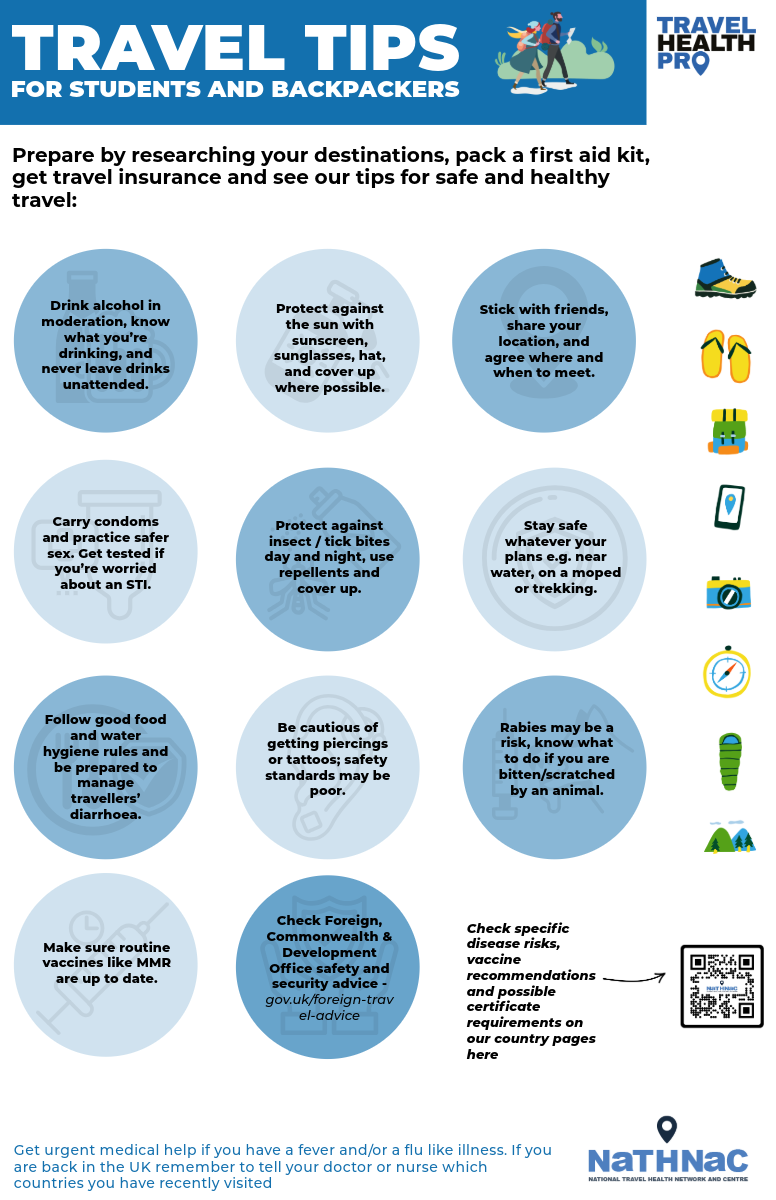
Safety, health, and insurance
Strong travel tips for students put safety first. A few steps lower risk a lot.
Health and care
- Check needed vaccines and entry rules well ahead. Some need weeks.
- Carry prescriptions in original bottles and a doctor note.
- Rest, hydrate, and eat well. Burnout ruins trips faster than a missed bus.
Insurance you actually use
- Get travel medical cover. It can save thousands in an emergency.
- Add trip interruption and lost gear if you carry a laptop.
- Read exclusions. Sports like scooters or hiking may need extra cover.
Street smarts
- Save local emergency numbers in your phone. Learn the area code.
- Use the hotel safe or a lock for your bag.
- Watch common scams. If it feels off, step away.
- Share your live location with a trusted friend when moving at night.

Visas, documents, and border basics
These travel tips for students help you glide through checkpoints.
Before you go
- Check if you need a visa or an eTA. Rules change often.
- Many places ask for six months of passport validity. Renew if close.
- Know the 90/180 rule in the Schengen Area. Track your days.
At the border
- Keep proof of funds and proof of onward travel.
- Have school papers if you study or attend a conference.
- Turn off jokes. Be clear, calm, and honest.
I saw a classmate almost turned back for no onward ticket. A quick, low-cost bus booking fixed it. Plan that proof ahead.

Using tech and apps like a pro
Travel tips for students shine when your phone works for you, not the other way around.
Stay connected
- Use an eSIM or local SIM to cut roaming costs.
- Download offline maps and translation packs.
- Back up photos to the cloud on Wi‑Fi only.
Plan and track
- Use a budget app to log spend in real time.
- Keep all tickets in one folder or app. Save PDFs offline.
- Set calendar alerts for trains, flights, and assignment deadlines.
Safety and sharing
- Share your itinerary with family. Update if plans change.
- Turn on device finders and screen locks.
- Avoid public Wi‑Fi for banking. Use a trusted data plan.
Cultural etiquette and responsible travel
Thoughtful travel tips for students include how to be a good guest.
Learn the basics
- Practice greetings and thanks in the local language.
- Check dress norms for sites and neighborhoods.
- Understand tipping and service charges. It varies by country.
Travel light on the planet
- Favor trains and buses over flights when time allows.
- Bring a refillable bottle and a tote for markets.
- Choose small, local places to eat and stay. Your money stays local.
Volunteering can be good, but vet programs well. Short, unskilled work can harm more than help. Ask how your role adds real value.
Study abroad, internships, and fieldwork travel
These travel tips for students also support your academic goals.
Before departure
- Confirm credit transfer, attendance rules, and grading.
- Review your program’s insurance and emergency plan.
- Ask about housing, local transit cards, and arrival support.
While on site
- Block study hours first. Then plan trips around them.
- Keep a simple log of field notes, costs, and contacts.
- Network with local clubs or labs. It can open doors later.
On a field course, we set study blocks in the morning and explored in the afternoon. Grades held steady. Morale soared.
A simple 7-day budget itinerary framework
Use this template to shape a week in a new city or region.
Day-by-day plan
- Arrival and essentials: check in, set up SIM, walk the area, early night.
- Core sights: book timed entries, group big items in one zone.
- Local life: markets, parks, a free walking tour.
- Day trip: nearby town by train or bus.
- Deep dive: a museum, workshop, or hike.
- Flex day: rest, laundry, and a sunset spot.
- Farewell loop: favorite food, small gifts, backup alarms for travel day.
Budget guardrails
- Food: breakfast from a market, one sit-down meal, street eats.
- Transit: weekly pass beats singles after 3–4 rides a day.
- Fun: pick one paid activity per day; fill the rest with free finds.
These travel tips for students help you see more without rush or regret.
Common mistakes students make and how to avoid them
Learn from what I have seen and done.
- Overpacking: Use the rule of three. If you will not wear it three times, skip it.
- Overbooking: Leave daily white space. You cannot sprint through culture.
- Ignoring fees: Low-cost flights add bags and seats. Price the full trip.
- No backups: Store passport scans in secure cloud and on your phone.
- Bank blocks: Set travel alerts. Carry two cards kept in different spots.
- No buffer: Add that 10 percent. It keeps stress low.
These travel tips for students turn pain points into smooth moves.
Networking and career value of student travel
Your trip can shape your future if you plan for it.
- Update LinkedIn with a short note on your project or language gains.
- Meet alumni or local professionals for coffee. One chat can guide a path.
- Keep a portfolio. Photos, field notes, and small wins tell a strong story.
- Share outcomes in class or at a campus fair. Practice your voice.
I once met a mentor on a hostel rooftop. That chat led to a remote internship the next summer.
Frequently Asked Questions of travel tips for students
What is the best time to book flights as a student?
Aim for 6–8 weeks before travel for many routes. Book earlier for holidays and busy seasons, and set fare alerts to track drops.
Do I need travel insurance for short student trips?
Yes. Even short trips can face delays or medical needs. A basic medical and trip cover plan is low cost and high value.
How can I find real student discounts abroad?
Carry your student ID or ISIC and ask at museums, buses, and trains. Many places do not advertise, but they do offer deals.
Is it safe to stay in hostels?
Most hostels are safe when you choose well. Read recent reviews, use lockers, and pick women-only dorms if that fits your comfort.
What is the smartest way to handle money overseas?
Use a no-foreign-fee card, avoid dynamic currency conversion, and withdraw cash from bank ATMs. Keep a small backup stash in a second spot.
How can I travel while keeping up with classes?
Block study time first on your calendar. Use offline reading, download lectures, and plan trips around due dates.
What should I do if I lose my passport?
Go to your embassy or consulate with passport copies and ID. File a local police report if asked and contact your school program lead.
Conclusion
Travel can fit your student life and your budget with a clear plan. Set goals, track money, pack light, and move with care. Use these travel tips for students to turn ideas into safe, rich days on the road.
Take one step today. Pick your dates, set a budget, and start a fare alert. Want more? Subscribe for new guides, or share your questions and wins in the comments.


