

Travel Guide To South Africa [Top Tips And Itinerary 2026]
South Africa offers epic safaris, buzzing cities, and coast-to-coast adventure in one trip.
If you want a smart, safe, and unforgettable journey, this travel guide to South Africa is for you. I have driven the Garden Route, tracked lions at dusk, and shared braai feasts with locals. I will show you when to go, where to stay, what to budget, and how to plan with confidence. Read on for a clear, expert-backed travel guide to South Africa that turns big dreams into a real plan.

Why visit South Africa now
South Africa is a complete trip in one country. You get top wildlife, fine wine, rich history, and great roads. The rand is often good value, so your money goes far. This travel guide to South Africa helps you plan a balanced route that fits your time and style.
On my last visit, I watched whales from the shore and, two days later, saw rhinos on a dawn drive. The range is huge, yet the plan can stay simple. Use this travel guide to South Africa to set clear goals. Then match them to the right season and region.
Best time to visit and weather by region
South Africa has two main travel rhythms. For safari, the dry months from May to September are best. Grass is low, water is scarce, and animals gather. For Cape Town and the Garden Route, November to March brings long, sunny days.
Helpful timing tips:
- Whale watching peaks from June to November, with Hermanus as a prime spot.
- Wildflowers bloom in Namaqualand from August to September.
- The sardine run hits the KwaZulu-Natal coast around June and July.
- Drakensberg hiking is crisp and clear in winter, but nights get cold.
A flexible travel guide to South Africa will blend seasons. You can tag a winter safari onto a warm KZN beach week. Or pair a Cape Town summer with Winelands and the Garden Route.
Top places and routes to explore
South Africa works best in loops. Each route has its own pace and mood. Use these highlights to anchor your travel guide to South Africa.
- Cape Town and the Cape Peninsula See Table Mountain, Cape Point, Kirstenbosch, and Camps Bay. Add Robben Island for vital history.
- Winelands (Stellenbosch, Franschhoek, Paarl) Enjoy cellar doors, mountain views, and world-class food. Try Pinotage and Chenin Blanc.
- The Garden Route (Mossel Bay to Storms River) Drive coastal cliffs, lagoons, and forests. Stop in Knysna, Plettenberg Bay, and Tsitsikamma.
- Kruger and the Greater Kruger Experience Big Five action in iconic landscapes. Consider private reserves like Sabi Sands for guided drives.
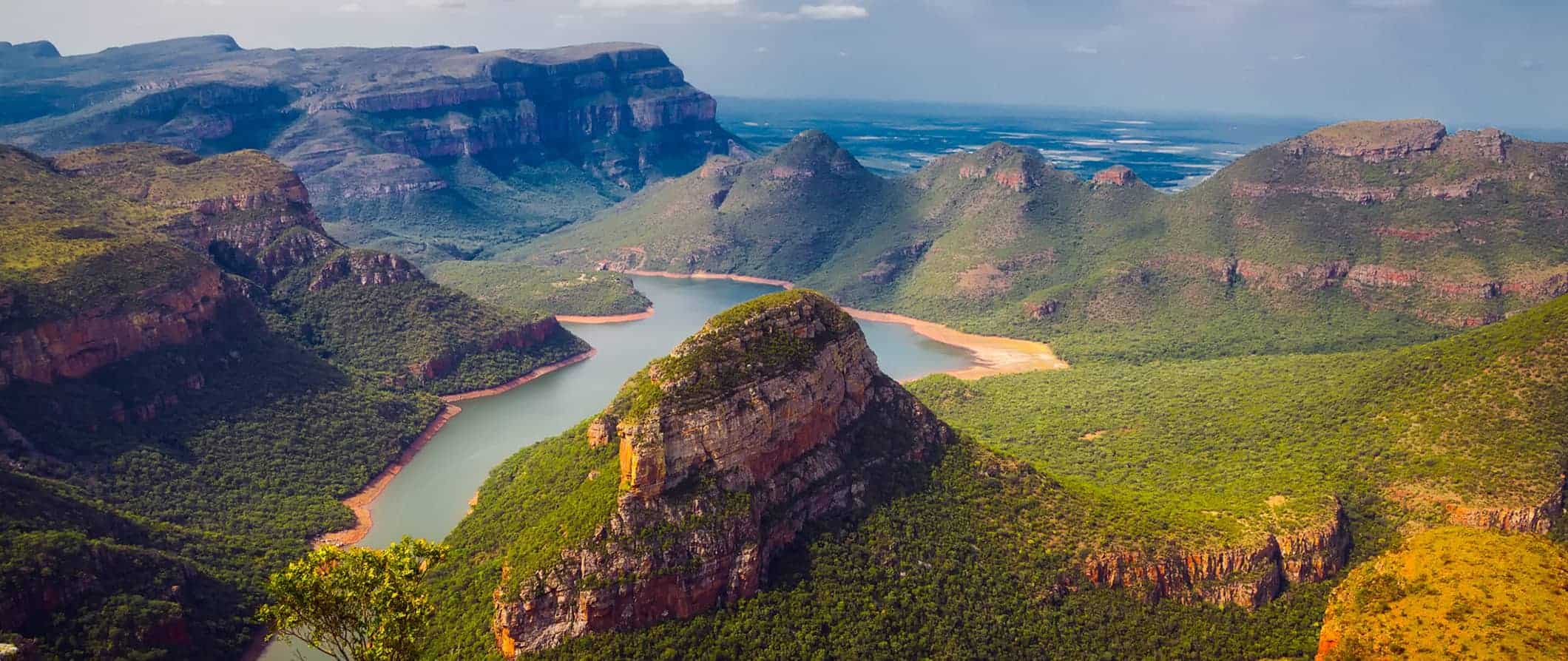
- Panorama Route (Mpumalanga) Visit Blyde River Canyon, God’s Window, and Bourke’s Luck Potholes on a great day loop.
- KwaZulu-Natal: Durban, iSimangaliso, Hluhluwe-iMfolozi Mix beaches, wetlands, and rhinos. Warm water makes it a year-round coast.
- Drakensberg (uKhahlamba) Hike basalt peaks, San rock art sites, and emerald valleys.
- Johannesburg and Soweto Tour Constitution Hill, the Apartheid Museum, and Maboneng. Take a guided visit in Soweto.
- Wild Coast and the Eastern Cape Find quiet beaches, rolling hills, and Xhosa culture. Add Addo Elephant National Park near Gqeberha.
- The Karoo and West Coast Meet starry skies, farm stays, and wide open roads.
I have done all of these over several trips. The mix is the magic. This travel guide to South Africa helps you pick three to five stops that fit your time.
Suggested itineraries you can trust
You do not need to see it all at once. Build a clean plan. Leave room for slow mornings and sunset views.
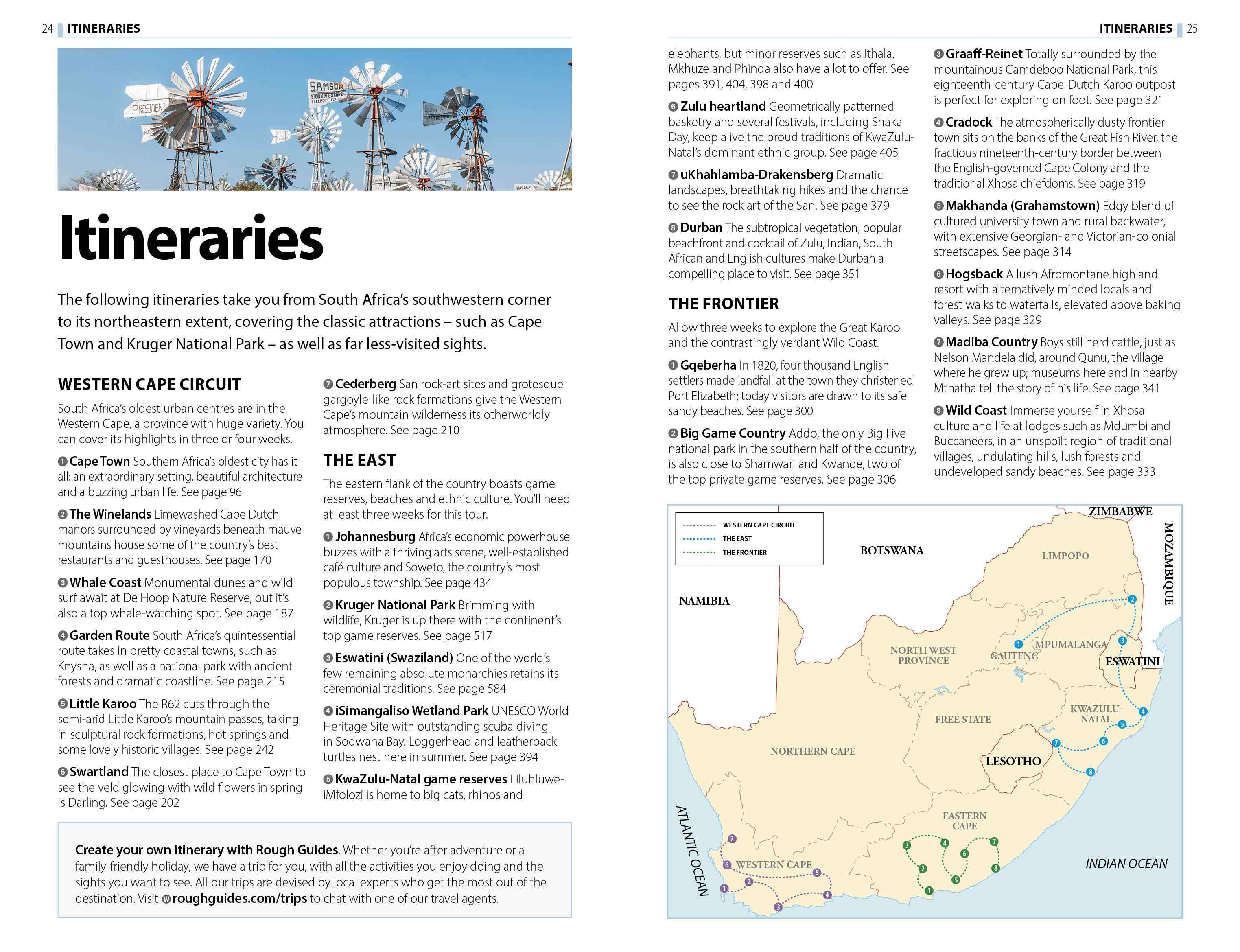
7 days: First-time highlights
- Days 1–4 Cape Town and the Peninsula, plus a Winelands day trip.
- Days 5–7 Fly to Greater Kruger for safari, or choose malaria-free Pilanesberg.
10–14 days: Classic coast and safari
- Days 1–4 Cape Town and Winelands.
- Days 5–8 Drive the Garden Route to Tsitsikamma.
- Days 9–12 Fly to the Kruger area for 3 nights on safari.
- Days 13–14 Overnight in Johannesburg and add the Apartheid Museum.
14–21 days: Grand tour
- Cape Town, Winelands, and the Garden Route.
- Kruger or Madikwe for safari.
- Add KwaZulu-Natal coast or the Drakensberg for variety.
I plan travel buffers into every route. Keep one open day per week for weather or rest. This travel guide to South Africa favors depth over rush.

Getting around and transport tips
Domestic flights are fast and often cheap. They link Cape Town, Johannesburg, Durban, and Kruger area airports. Book early for the best fares. A carry-on only plan saves time.
Self-drive is my top choice. South Africa drives on the left. Roads are good on major routes, with many fuel stops and rest areas. Use a reputable rental firm and take full cover.
In cities, ride-hailing apps are common and safe when used from your hotel or a busy spot. The Gautrain is a clean, fast rail link between O.R. Tambo Airport, Sandton, and Pretoria. For backpackers, shuttles run popular corridors like the Garden Route.
Safari planning and wildlife essentials
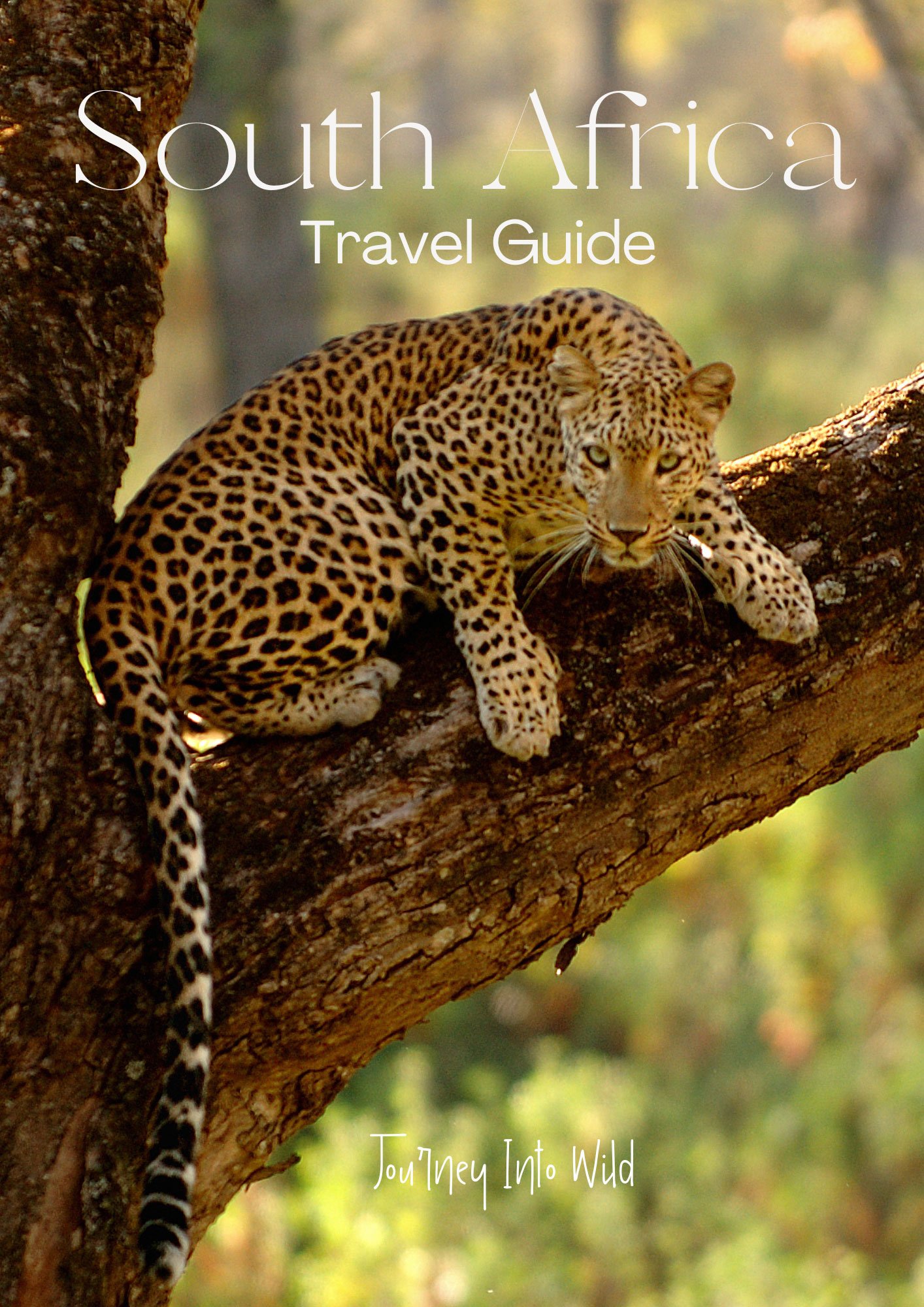
Kruger is the classic choice, with easy self-drive and many camps. Private reserves like Sabi Sands share borders with Kruger and offer guided dawn and dusk drives. For malaria-free options, look at Pilanesberg or Madikwe. Addo Elephant is great for a shorter, coastal safari.
Wildlife basics:
- The Big Five are lion, leopard, elephant, rhino, and buffalo.
- Marine Big Five include whale, shark, dolphin, seal, and penguin.
- Keep to speed limits in parks. Many sightings happen near waterholes.
- Do not feed or touch animals, and never get out of your car except at marked spots.
Health and safety:
- Parts of Kruger and northern KwaZulu-Natal have malaria risk. Ask a travel clinic about prevention.
- Wear long sleeves at dusk and use repellent.
- Avoid any cub petting or elephant rides. These are not ethical.
I once tracked fresh lion prints at sunrise and found a pride in soft light. Patience wins. This travel guide to South Africa puts dawn and dusk drives at the heart of each day.
Culture, history, and local etiquette
South Africa has 11 official languages and many cultures. Ubuntu, the idea of shared humanity, runs deep. Learn a few words like sawubona (hello) or dankie (thank you). Ask before taking photos, especially in townships or markets.
Tipping is standard. In restaurants, 10–15% is common for good service. For parking guards and bag helpers, offer small change. Dress modestly at cultural sites and churches.
Key sites for context:
- Robben Island and the District Six Museum in Cape Town.
- Constitution Hill and the Apartheid Museum in Johannesburg.
- The Cradle of Humankind for deep-time history.
Food, wine, and coffee you should not miss
Meals are a big part of any travel guide to South Africa. Try a braai, which is a social grill feast. Taste biltong, bobotie, and Cape Malay curries. In Durban, a bunny chow is a spicy favorite.
Wine lovers can tour Stellenbosch and Franschhoek. Pinotage and Chenin Blanc shine here. Many farms pair art, food, and views. South Africa also has a strong coffee scene with skilled roasters in major cities.
Dietary needs are easy to manage. You will find halal, vegetarian, and gluten-free options in big hubs. Ask staff for guidance, and check menus online.
Costs, money, visas, and connectivity
The local currency is the South African rand (ZAR). Cards and contactless pay work in most places. Carry some cash for tips, markets, and rural fuel stops. ATMs are common in towns and malls.
Sample daily budgets per person:
- Shoestring 40–70 USD with dorms, self-catering, and buses.
- Mid-range 120–250 USD with cars, guesthouses, and a few tours.
- Luxury 350+ USD with private reserves and fine dining.
Many passport holders get visa-free entry for up to 90 days. Others use an eVisa. Rules can change, so check official guidance before you book. For phones, buy a local SIM or eSIM from major networks for cheap data.
Power is 230V. Plugs vary, so bring a universal adapter. Load shedding can occur, so pack a small power bank and save offline maps. This travel guide to South Africa helps you stay connected on the road.
Safety, health, and common scams
Be alert, not afraid. Do not flash valuables. Keep your phone out of sight on quiet streets. Drive with doors locked, and ask your hotel for safe walking zones.
Use ATMs inside banks or malls. Decline offers of help at machines. In parks, stay in your vehicle and obey signs. At the beach, swim where lifeguards and flags are posted. Rip currents are real.
Tap water is safe in many cities, but ask locally. Pack a filter bottle for rural areas. Routine shots should be up to date. For malaria areas, get advice from a travel clinic. Always carry travel insurance.
Packing list that works
Pack light layers. Days can be warm and nights cool, even in summer. Neutral colors help on safari. Good walking shoes are a must.
Essentials:
- Sun hat, sunglasses, and high-SPF sunscreen
- A reusable water bottle and small first aid kit
- Binoculars for wildlife and a headlamp for power cuts
- Universal adapter and a power bank
- Copies of documents and an international driver’s permit if needed
For cameras, bring a spare battery and memory cards. A dry bag helps on boats and beach days. This travel guide to South Africa favors simple, durable gear.
Responsible and sustainable travel
Choose lodges and tours that support local jobs and training. Ask where fees go and if guides are from nearby towns. Pay fair tips and buy from independent makers.
Keep to trails. Do not litter. Reduce plastic by refilling your bottle. Avoid any wildlife contact or staged photos. If you want to volunteer, vet the group and its impact.
A strong travel guide to South Africa includes ethics. Your choices protect habitats and help communities thrive. Small changes add up across a long trip.
Photography and trip-planning checklist
Light makes the shot. Sunrise and sunset are best for color and calm animals. Use a bean bag on car windows for stable safari images. Never pressure guides to edge too close.
Trip checklist:
- Book key parks, camps, and top restaurants early in peak months.
- Lock in flights and a rental car with full cover.
- Check entry rules, passport validity, and travel insurance.
- Consult a travel clinic 6–8 weeks before arrival.
- Consider a SANParks Wild Card if you will visit many parks.
- Share your route and keep copies of documents in the cloud.
This travel guide to South Africa ends with one rule. Protect time for serendipity. That is when the trip comes alive.
Frequently Asked Questions of travel guide to south africa
Is South Africa safe for solo travelers?
Yes, with common sense. Stay in well-reviewed areas, use ride-hailing at night, and take local advice from your host.
Do I need a visa to visit South Africa?
Many travelers get 90 days visa-free. Others use an eVisa. Check current rules with official sources before booking.
What is the best time for safari in South Africa?
May to September is the prime window. It is dry, cool, and wildlife gathers at waterholes, which boosts sightings.
Can I self-drive in Kruger National Park?
Yes, Kruger is ideal for self-drive. Follow speed limits, start early, and plan rest camps and fuel stops ahead.
How much should I tip in restaurants?
Tip 10–15% for good service. For porters or car guards, small cash tips are appreciated.
Is tap water safe to drink?
In major cities, it is often safe. In rural areas, ask locally or use a filter bottle.
What plugs are used in South Africa?
Voltage is 230V. Bring a universal adapter to fit local sockets and charge devices.
Conclusion
South Africa rewards clear choices and slow moments. Pick a season, choose a route, and balance cities, coast, and safari. Use this travel guide to South Africa to set dates, book anchor stays, and leave space to wander.
You now have the tools to plan with ease. Start sketching your route today, price a few flights, and reserve that first night. If this guide helped, subscribe for new itineraries and ask your questions in the comments.


